Why Ballots Use Secret Voting
Why ballots use secret voting: understand how privacy protects independent choice and why a hidden vote became a defining feature of elections.
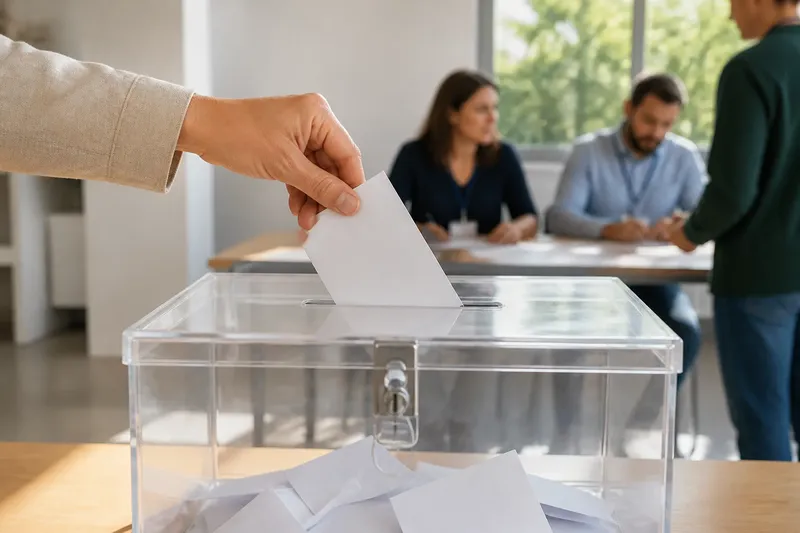
Secret voting protects a voter’s choice from becoming a demand that must be explained or proved. The reason ballots use secret voting is not simply that people prefer privacy: concealing each individual choice helps make political pressure harder to apply and lets a result reflect voters’ own judgements.
That principle sounds straightforward, but it marks a significant shift in what a vote is for. A ballot is both an expression of preference and part of a public decision. Secret voting keeps the collective result visible while shielding the individual decision that contributes to it.
A vote can be a choice or a performance
Imagine a worker whose employer openly supports one candidate, or a neighbour whose landlord urges residents to back another. If each voter must announce a choice in front of interested people, the act of voting can become a performance of loyalty. Even without a direct threat, a person may feel obliged to choose what keeps a relationship comfortable.
In a secret ballot, the voter can still hear arguments, discuss candidates and change their mind. What is withheld is the final individual choice from people who might reward, punish or pressure them for it. The privacy is therefore not a rejection of public debate; it protects a personal decision within a shared political process.
Keep the distinction clear: the result is public, but each person’s selection need not be.
Open voting made pressure easier to organise
Before secret ballots became a defining feature of elections, voting could be public. A person might state a preference aloud, raise a hand, or use another visible method. Such arrangements made participation legible to officials and fellow voters, but also to employers, patrons, local power-brokers and anyone else with an interest in the outcome.
Visibility could make it easier to check whether someone had done what they were expected to do. A supporter might be watched while voting; a person dependent on another for work or help might find refusal difficult. The pressure did not have to take the form of an explicit threat. The knowledge that a choice could be seen might be enough to shape it.
Public voting was not necessarily coerced in every place or circumstance. Its weakness was structural: it made a voter’s personal decision easier to observe and act upon. Secret ballots responded to that vulnerability by separating the individual act from the audience around it.
Privacy changed what political influence could demand
Influence does not disappear when a ballot is secret. Candidates still persuade, communities still express shared values, and people still talk about their choices. What changes is the ease with which an influential person can verify that a particular voter complied with a request.
That distinction matters because pressure often depends on proof. If someone can demand, “Show me how you voted,” a choice may be treated like a receipt for a favour or a sign of obedience. A private ballot makes that demand harder to satisfy honestly: the voter can discuss an opinion, but the marked choice is not meant to serve as evidence offered to another person.
Say a shopkeeper in an invented town tells a supplier to support a particular candidate and promises more work in return. Under an imagined public voting arrangement, the supplier might worry that the shopkeeper can watch the choice. With an imagined secret ballot, the supplier could still consider the appeal but make the final selection privately; the observable result would be that the shopkeeper could no longer readily confirm the supplier’s individual vote. This illustrates how privacy can weaken one channel of pressure, not erase every unequal relationship.
Secret ballots require public confidence in the count
There is a useful tension at the heart of secret voting. The individual choice should be concealed, yet the election cannot depend on a mysterious result that voters are simply asked to trust. A credible process has to protect privacy while making the handling and counting of ballots accountable.
That is why secrecy and transparency describe different parts of the same arrangement. A voter’s selection is private; the rules for collecting, securing and counting ballots can be open to scrutiny. If the process is clear enough for observers to understand how a total is produced, individual privacy need not mean that the outcome is beyond question.
The civic bargain is therefore not “keep everything hidden”. It is “keep the voter’s choice private, and make the public process answerable”.
What does a secret ballot actually protect?
Does ballot secrecy mean voters should never discuss their choices?
No. People may choose to share their opinions or explain how they voted. Secrecy means they should not have to disclose an individual choice as a condition of participating.
Does a private vote stop intimidation?
It can make one form of intimidation harder by limiting the ability to verify a voter’s selection. It cannot by itself remove threats, dependency, social pressure or other barriers to free participation.
Why keep the count public if the vote is private?
The count determines a shared outcome, so its fairness needs public confidence. Keeping individual choices private while allowing the process to be scrutinised serves both personal freedom and collective accountability.
Is ballot secrecy the same as anonymity?
They are related but not identical ideas. Secrecy concerns whether others can connect a voter with a choice; anonymity more broadly means that information cannot identify the person behind a record.
Privacy is a condition for independent judgement
A secret ballot does not tell voters what to think, nor does it promise that every choice is free from influence. Its civic purpose is more modest and more useful: it limits the extent to which an individual must make a political decision in front of someone who may benefit from controlling it.
That purpose helps explain why ballot secrecy became central to elections. It treats voters as people entitled to form a judgement without producing proof of obedience, while leaving the shared result open to public scrutiny. The next time election privacy is discussed, ask two separate questions: can someone discover an individual choice, and can the public examine how the result was reached? A sound civic process has to take both seriously.